

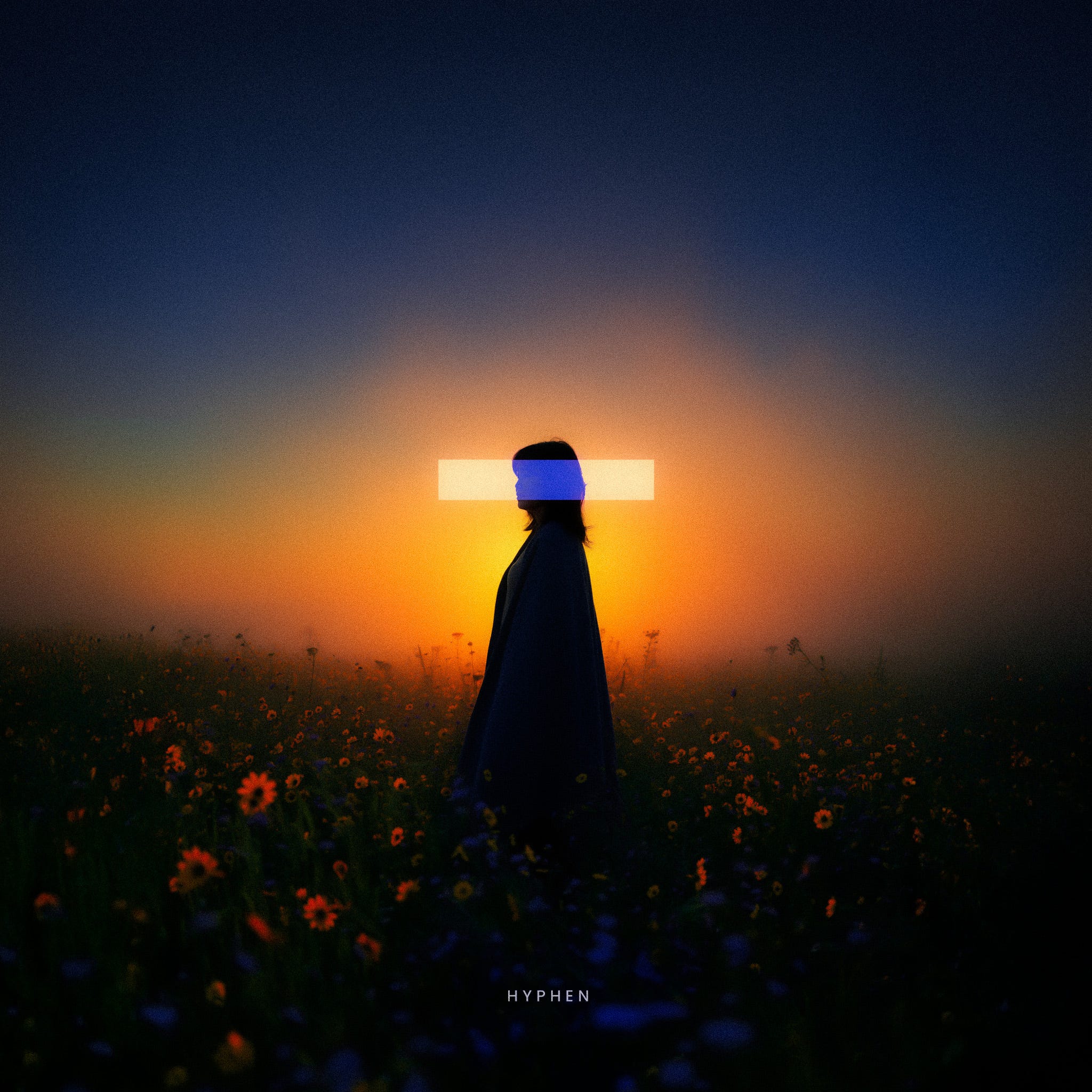
gold spills across flowers that shouldn’t exist.
there i am, remade in pixels.
the me sitting behind the screen is a little in awe. of this new way of seeing myself. of what i might lose.
for months i’ve been asking myself: what does it mean to be an artist when machines can create endlessly?
flowers in every color, every style.
so what do i make that still feels alive?
i keep returning to the idea of gardens.
as AI learns to generate endless flowers, i just want to plant gardens.
what is a digital garden?
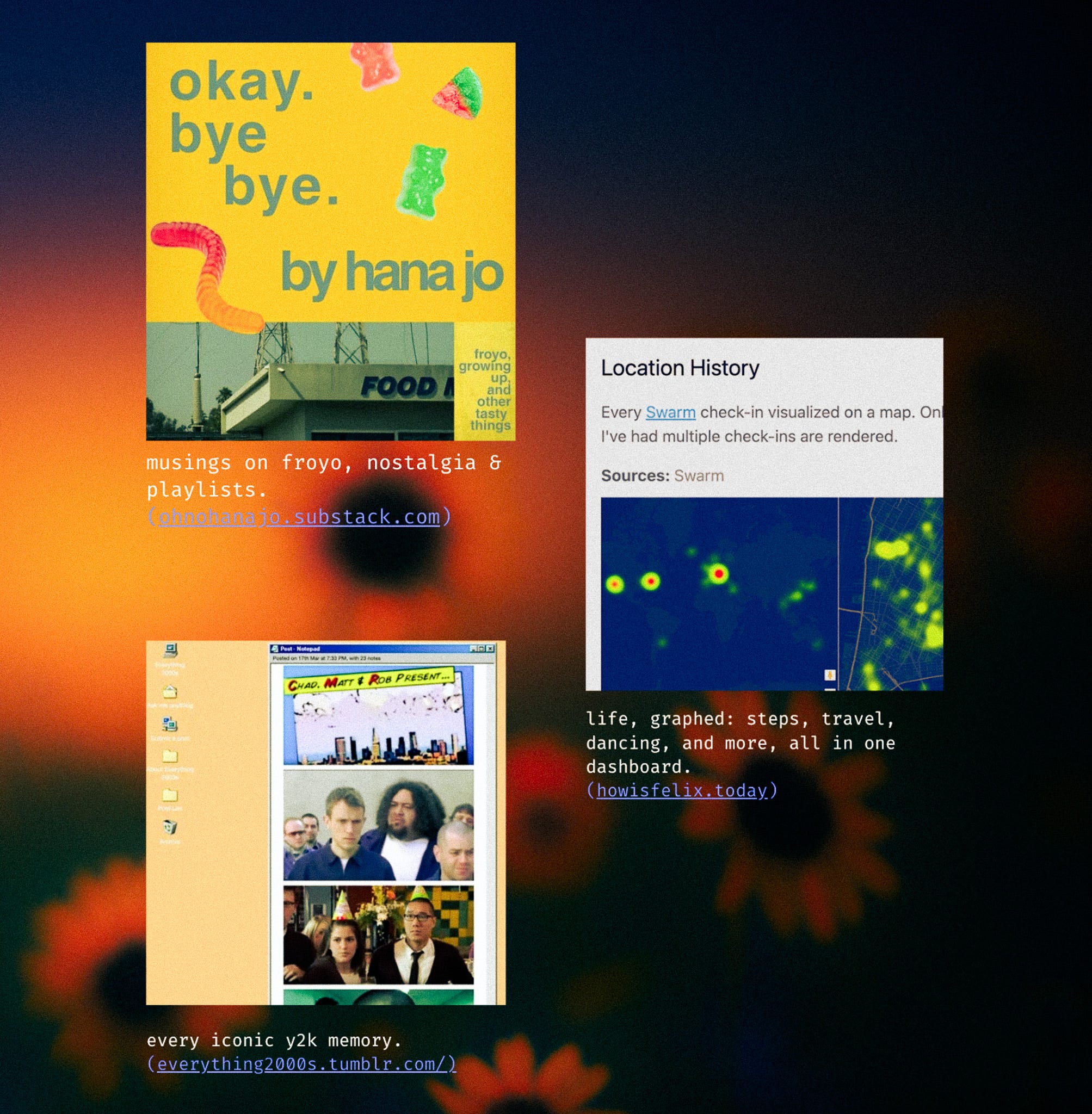
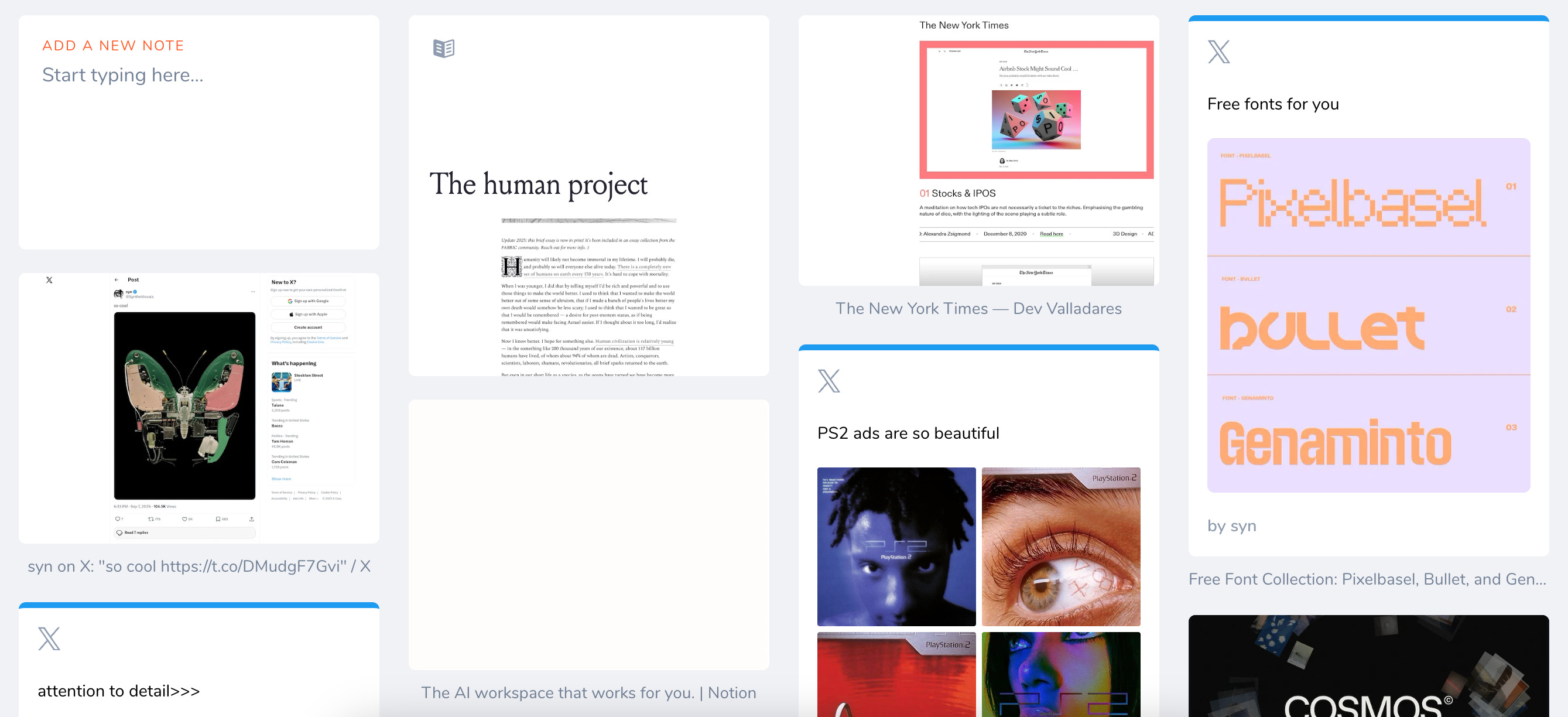
a digital garden could be a collage of influences.
it could be an intensely personal list on google docs
it could be a substack tracing things you’ve loved and let go of.
gardens look different, but they share the same philosophy: they are living homes for ideas, tended over time.
not polished. not finished.
just intentionally kept.
i stumbled across my first garden in freshman year while reading a brief history & ethos of the digital garden, which chronicled the rise of these personal, handmade spaces.
only while revisiting the concept recently did i realize gardens weren’t just an aesthetic choice. they were always a response to something breaking.
how gardens became urgent
for most of human history, we gardened our information.
one of fiction’s first multiverse concepts described time as a garden of diverging and converging paths.
when the internet emerged, “wiki gardeners” tended our knowledge ecosystems.
in the earliest websites, you would navigate through hypertext gardens.
but then the metaphor changed.
in his 2015 keynote “the garden and the stream: a technopastoral,” mike caulfield described how we stopped walking through gardens and started being swept into “streams”—algorithmic feeds. the birth of targeted digital advertising had turned the internet into a torrent.
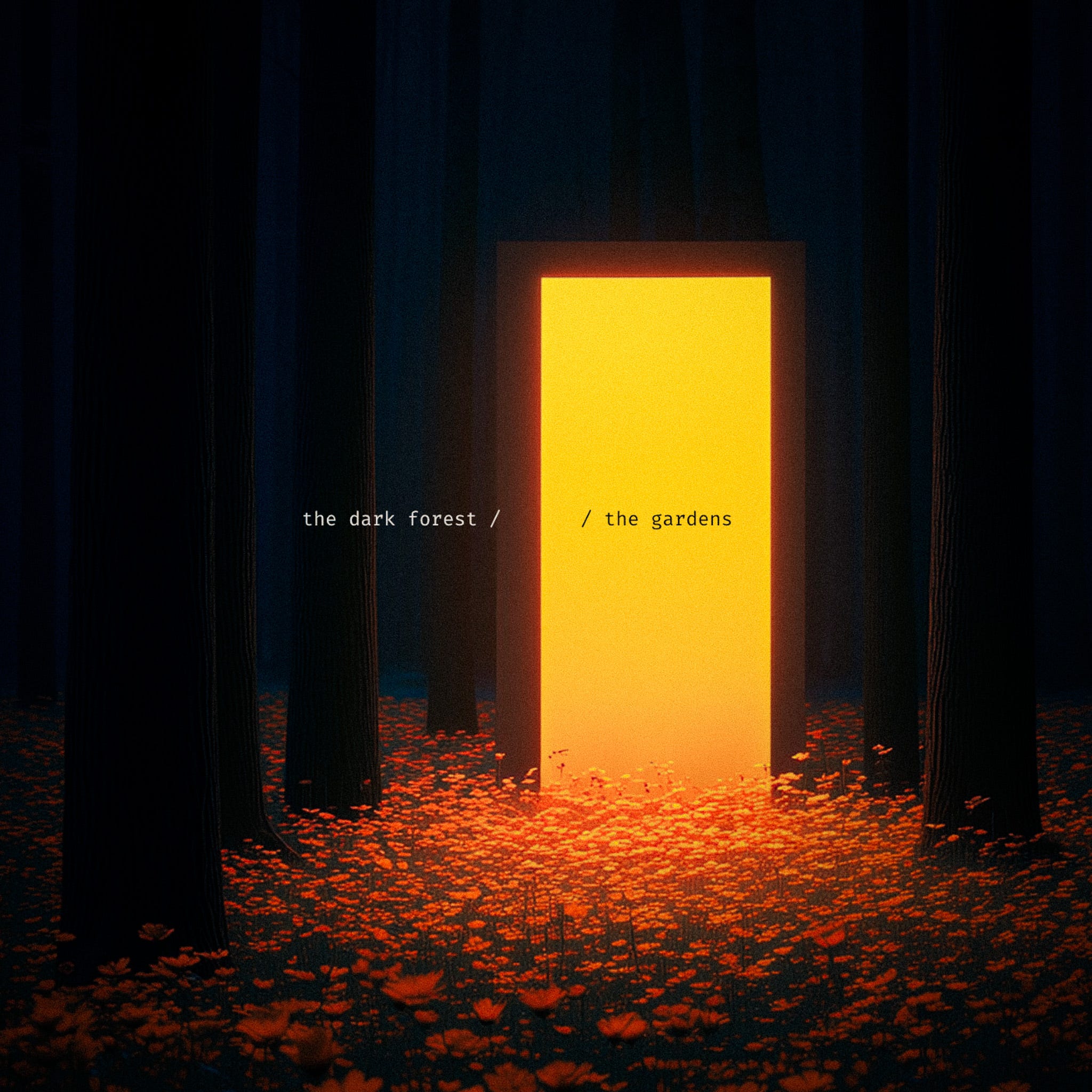
soon, people were talking about the dark forest theory of the web. the internet seemed full of motion, with feeds refreshing, bots rustling, and ads clamoring for attention, yet amid all this mimicry of life, people themselves felt absent.
then came late 2022, and the launch of chatgpt, image generators, and AI copy tools that whispered creation at unprecedented scales.
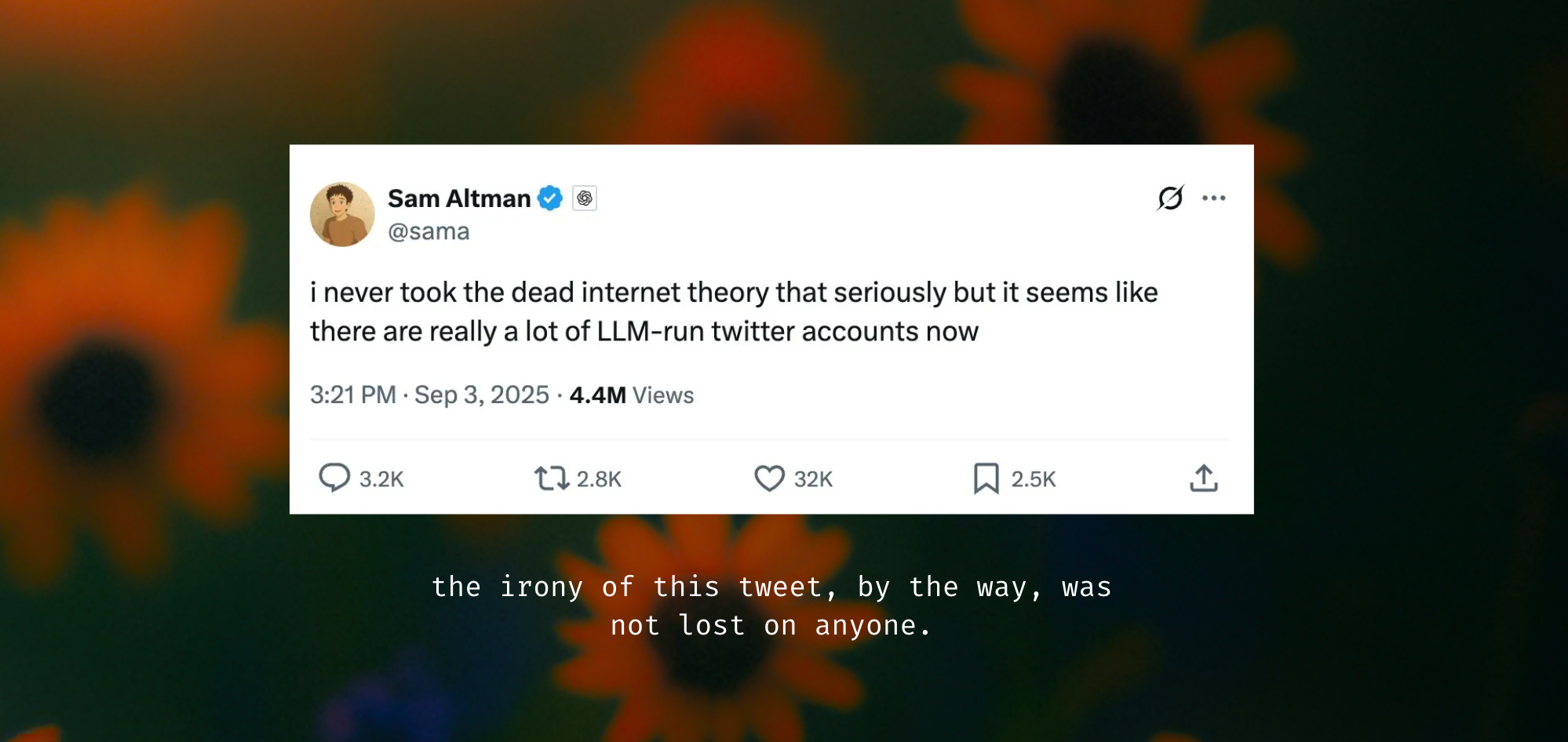
observers predicted the dark forest would rapidly expand, and they were right. by 2026, it is predicted an estimated 90% of online content will be AI-generated.
but this represents something fundamentally different from earlier dark forest problems, like spam or low-effort content. now, our own interactions have become raw material for models to learn from and generate more content in our image.
everything, even our shadows, gets recycled to keep the forest moving.
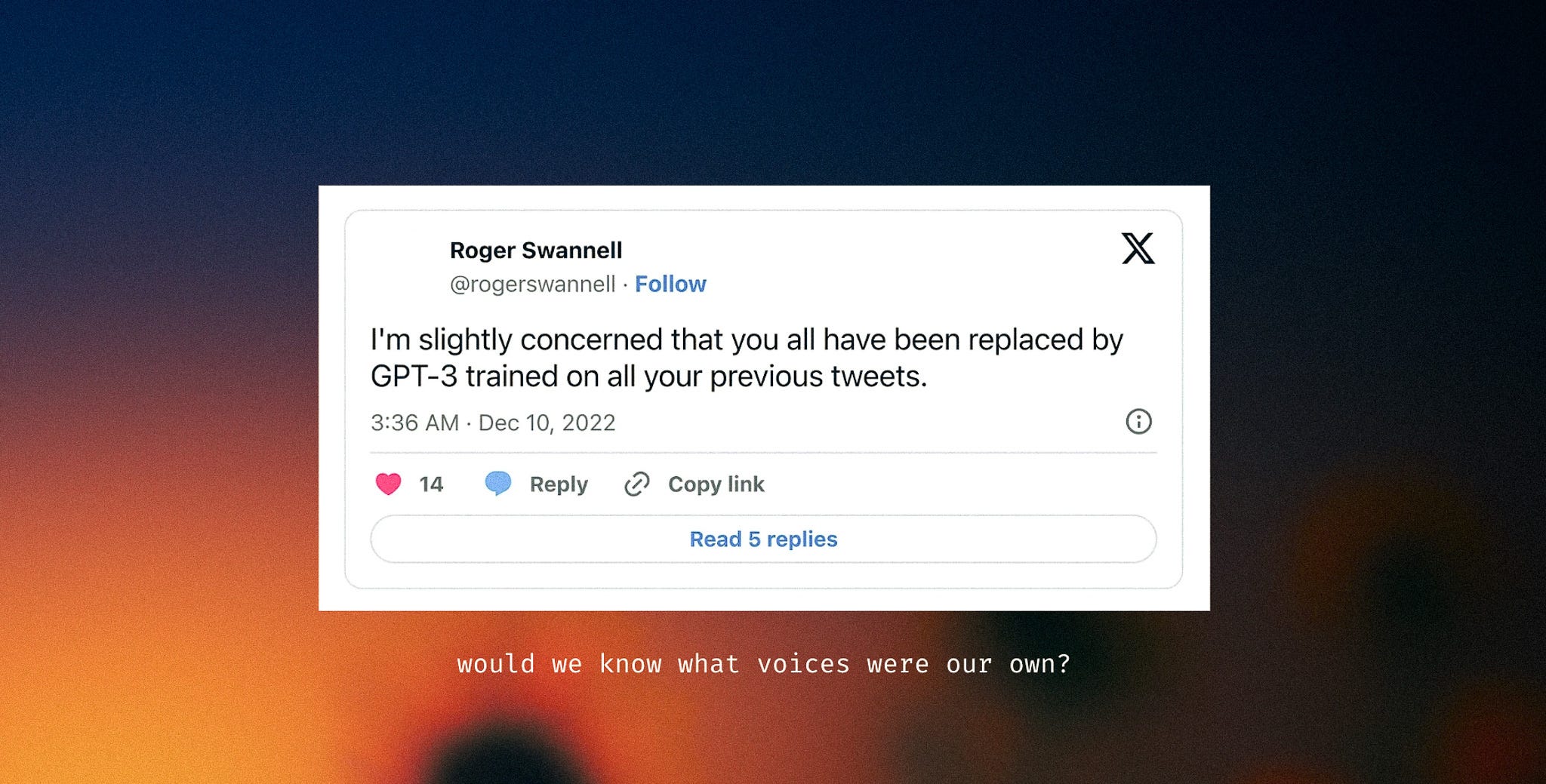
we’ve always had to make sense of noise. but this time, the noise sounds like our own voices.
six principles for gardening
so i sat with the question: what was i actually teaching in my content?
how to generate, or how to create?
how to produce more, or how to tend what matters?
i realized i’d been so focused on showing people what AI could do that i hadn’t stopped to ask what it should do. or more importantly, what role I wanted to play in all of this.
gardening is fundamentally not about producing more. it’s about choosing what deserves tending. leaving traces of care, signs that a human hand touched this, returned to it, believed it worth keeping alive.
so i’ve been building something a little different recently: my own practice of gardening. six principles.
i. create with risk.
the best art risks something.
when i create, i take a risk because i am the face of my work.
as murray shanahan describes in talking about large language models, to “triangulate” upon reality may be the last distinctly human acts. to test our understanding against the physical world we share, against other people, against lived experience. to be proven wrong and change our minds.
that accountability to reality is what makes our creativity fundamentally different from machines. AI doesn’t live in the world it creates for, and therefore it doesn’t inhabit the consequences.
when i decide to tell a story, i make a bet about what matters.
i’m saying i considered what this story might do in the world.
i thought about who it might harm or help.
i weighed the tone, the implications, the subtle messages embedded in my choices that would enter into circulation.
i’ve come to peace with the fact that i might, and probably will at some point, get it totally wrong; that i might face scrutiny; that my work might produce effects i did not intend. but i think the value of creating things now lies in commitment, in the willingness to put myself on the line, to make choices that reflect my values and judgment, and to remain answerable for those choices.
II. cultivate a shared garden.
AI can plant flowers, but it cannot cultivate a shared garden.
a real garden isn’t about the gardener. it’s about what grows between the people who inhabit it. when i think of creating, i think of that community of people.
i think community turns scattered viewers into something living. it’s when people start talking to each other in the comments instead of just to me, when someone recognizes another name they’ve seen before, that it stops being simply “my audience” and starts being our space.
AI can produce flowers, but it cannot care about them.
it can’t build those invisible threads of belonging. it can’t make people see each other.
it cannot remember you, who might’ve read my first hyphen article, or watched one of my videos, and is still here.
in an age where infinite content blooms, the most valuable thing i can offer is my attention. not to the algorithm, but to you, and to the spaces that grow between you.
III. tend to roots.
in an age of AI, i think our taste is our most important asset.
so i don’t aim for perfectly engineered flowers. i grow work that only i could have made.
to do that, i’ve had to dig into my roots—documenting the memories, conversations, and pieces of media that shaped me. hong kong noir films. blue hour on palm drive. the first time i watched ex machina. they’re the soil my work grows from, and i return to them, trying to understand them more deeply each time i create.
IV. create superblooms.
AI feels like an existential threat, but this fear isn’t new.
the camera was accused of diminishing painting. music sampling was criticized as theft.
art has always been a dialogue between creator and tool; every transformative tool in history has been called the death of art.
yet every time, new genres were born.
since Generative Fill launched in Photoshop, my dorm room has turned into an endless film set. scenes that would take me days in Blender have become entire worlds prototyped in an afternoon.
i’m seeing a new wave of what i call “creative artisans”: artists who care deeply about their craft and are now building with the sky as their limit. for examples, designers like @meshtimes are crafting software programs in public, evolving into design engineer.
i think we will be seeing more hyphenated careers. programming, VFX, and other bodies of knowledge have unlocked as new mediums for storytellers. i choose to grow flowers at those intersections.
V. knows where seeds come from.
what the garden owes
every garden has a source, and we tend borrowed soil.
the life's work of artists has become training data without consent or compensation. my own work is training the very systems that i draw upon. common crawl scraped billions of images from deviantart and other artist platforms. laoin-5b holds copyrighted work from artists who never agreed to train these systems.
i can’t undo that harm, but i can choose my tools carefully. i use models like firefly and moonvalley, which are trained on licensed work; choose not to generate in the styles of artists who haven’t consented, like in the style of studio ghibli; and when I use AI in any part of my work, i label it clearly.
these personal solutions are not anywhere near perfect, but they are boundaries i can draw.
the cost of growth
borrowed soil isn’t the only cost of generation. a few seconds of generative video consumes as much electricity as powering my laptop for days. that’s why i think we need to treat every image, every video as an active choice to spend energy here instead of somewhere else.
i try to treat AI generation like film photography by composing generated images them using cinematography terminology, and by giving clear visual instructions rather than iterate endlessly on vague prompts.
i avoid AI when it isn’t necessary. sometimes a manual step is enough, and a search is always better than asking a chatbot. each output must justify the energy it consumes. the garden i tend should be worth what it takes from the soil.
VI. let soil rest
in many ways, i choose to make my content slow.
for example, i spend 10 to 20 hours on each video, and add handwritten elements and other choices to ensure my work feels touched by hand. while AI sees that as inefficiency, it’s craft.
yet i also know the seductive pull of instant output, the itch to generate endlessly.
but creative joy is fragile. it withers under efficiency’s promise.
so i want to let tools handle the mechanical aspects, like showing me directions when i’m stuck, and executing clear intentions when generating images of videos. but i protect what’s meaningful — the spark of an idea, the research, the decision of what deserves to exist.
i think a gardener should ask “what should grow?” before asking “what can i generate?”
and some grounds grow richer in silence.
the garden i tend
i don’t know if i understand art anymore, or if understanding it is even possible. at this moment in time, it seems the world keeps remaking itself.
but gardens gives me something to hold onto, a framework for making choices when everything feels uncertain:
plant something.
tend it carefully.
see what grows.
not perfect flowers.
just a garden i can stand by, and welcome you into.
This is amazing Cole! Your writing is poetic and rhythmic but also so lucid at the same time. You have me thinking about my own garden now … excited to see what comes next :D
love everything about this!!