

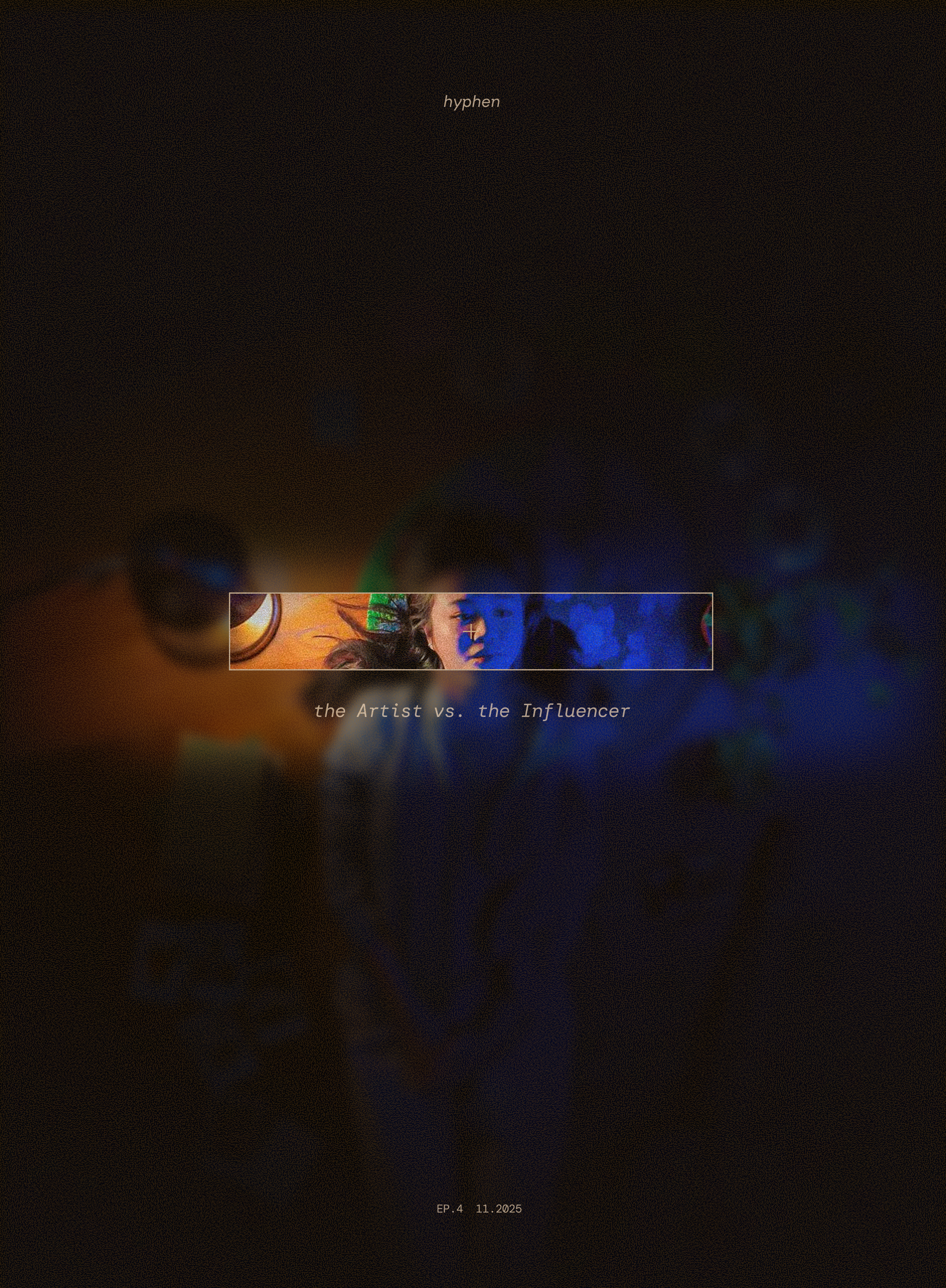
a month ago, soon after taking the leap to create full-time, i wrote this:
being a creator is the easiest way to lose yourself.
by day-
the algorithm reads you perfectly. digital creator. X followers. optimal posting time.
it is decisive, yet it never fully reveals its secrets. it doesn’t recognize your art from all other pixels it analyzes. it only recognizes if a userID has paused its scroll.
so the influencer in you calculates accordingly—
if i use a trending audio, will it make people pause?
if i dumb down the message, will it get more shares?
to the artist within you, the influencer says: just to grow our reach. then we can make what we really want.
but there’s always another optimization, another compromise.
be you is espoused at the influencer dinner, evangelized by platform leads in keynotes.
be you.
be your audience’s best friend / big sister / teacher.
be you, if you are funny, relatable, resonant, and of course, always online.
be the version of yourself that performs.
the paradox is that the very platforms that demand authenticity turn it into another form of performance. when machines become our social authority, our sense of quality is outsourced to systems optimized to engage rather than express, antithetical to the aim of the artist.
by night-
the analytics quiet; between midnight and 2am, the audience logs off. the influencer finally sleeps.
an old paint-scented apartment, a forgotten fifth floor, where creating had no witness. the artist in you tries to remember what being in those spaces felt like.
you feel the dizzying rush of freedom.
you can make anything. you can refuse the influencer’s agenda.
but then what?
in the creator economy, can the artist exist without the influencer?
at dawn-
the influencer optimizes—how well will this perform?
the artist expresses—how true does this feel?
somewhere between midnight freedom and when the influencer starts counting, though, there is a third framework.
how well does this communicate how i feel inside?
it sounds like a simple creator-audience exchange, but this question positions artist and influencer as partners rather than diametric opposites.
you cannot ignore the audience. art exists in dialogue. a painting no one sees isn’t less art, but it’s art that hasn’t completed its circuit, hasn’t entered into conversation with the world.
you also can’t create only for the audience, as you’re no longer expressing, but just reflecting back what they want to see.
thus, you can balance what feels true (art) with how you can communicate that truth with others (influence).
when you’re an artist first, influence becomes the natural physics of work that matters finding its people. this doesn’t mean ignoring the audience; it means creating from fullness rather than emptiness, from gift rather than transaction.
it means building in a third economy, neither the scarcity of the starving artist nor the hollow abundance of the influencer. an economy where the work nourishes you, where you create because you have something to say, not because you need something from the audience.
the artist creates from truth. the influencer finds the right people to share it with.
the daylight will return. the influencer will wake up.
but now we have an agreement: the influencer will serve the artist’s vision, not the other way around.
the world needs artists who happen to have influence. not influencers who happen to make art.