

streaming feels different to us than cinema. our words prove it.
binge-watching, for instance, the term for addictively streaming new netflix shows, has a grotesque quality to it. it’s stuffed full. an apex of digital consumerism that feels crammed in that hyphen.
on the other hand, silver screen, a term describing cinema, or movies we experience in the theater, glistens with something else entirely. a nostalgic glamor. a larger than life.
our language shows that we’ve ascribed something precious to cinema.
yet today, streaming announces that it absorbed the silver screen.
netflix has declared its acquisition of warner bros for $82 billion. a century of stories from the likes of hbo, casablanca, batman, harry potter now belongs to the platform that convinced us to watch movies on our laptops.
and the question is now, what happens to cinema?
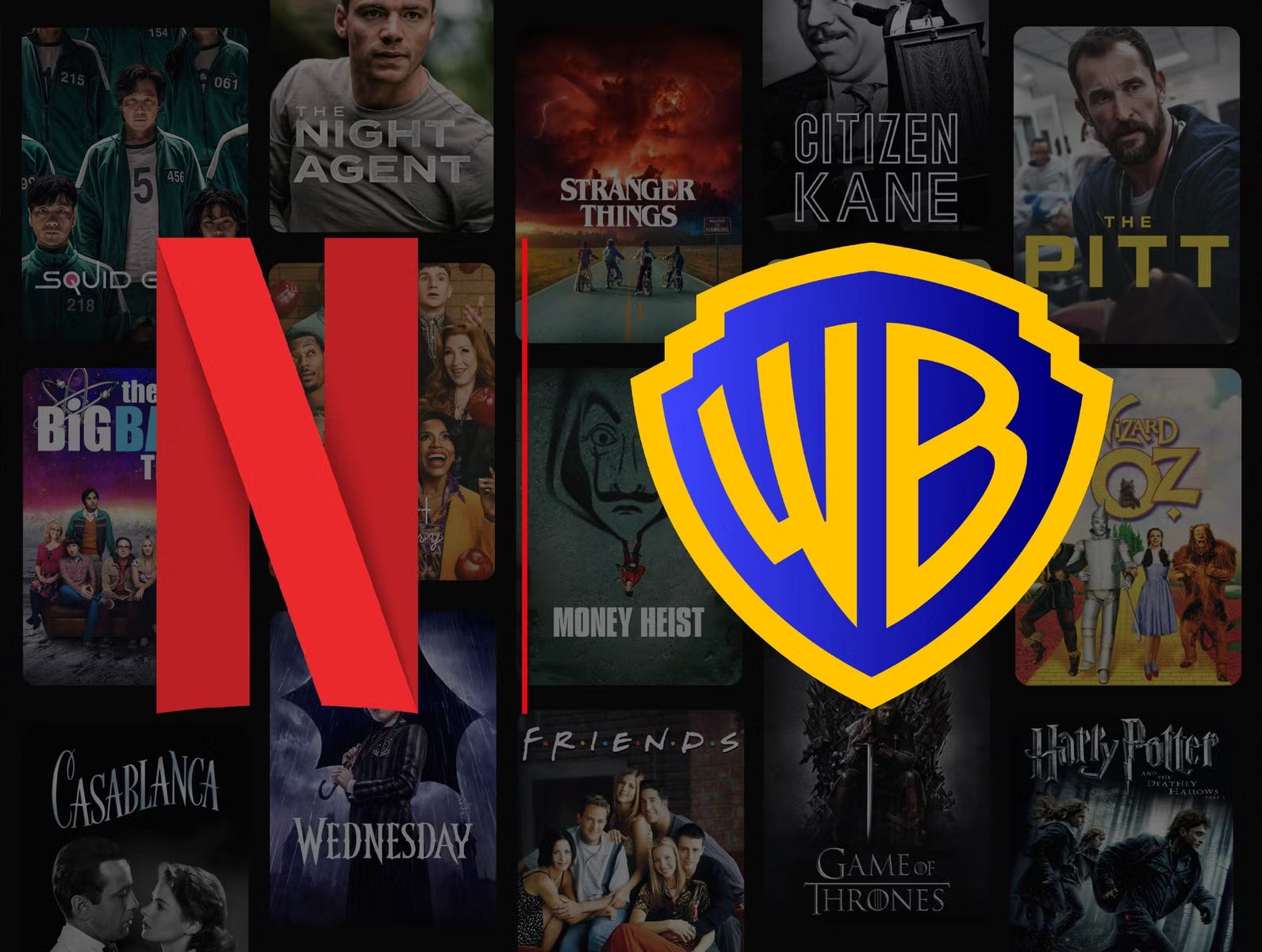
what netflix bought
on the surface, this is a catalog play. a mile wide and an inch deep, netflix’s catalog is constantly being replaced. if 50% of viewers don’t complete a season, netflix would not renew a show. with the acquisition, it would now have a deep catalog of tried-and-true stories.
it’s also a prestige play. netflix has never escaped feeling like the streaming also-ran at awards season. they’ve received 170 oscar nominations and still haven’t won best picture, whereas hbo has been awarded over 220 emmys. netflix is buying the legitimacy that the prestigious library offers.
and it’s a money play. netflix has struggled to build durable ip—stranger things is their biggest original (over $1 billion in revenue) but it’s ending along with squid game. they don’t have a marvel or star wars equivalent, a universe that regenerates value across decades. warner bros. has four gaming franchises alone—harry potter, game of thrones, mortal kombat, and dc—each generating over $1 billion in revenue. these multi-generational engines earn through cultural relevance that compounds over time.
ultimately, netflix has been overcharged for attention for a decade because it has never built cultural equity. deep ip, prestige, and generational worlds are the compound interest it never earned, and so they’ve decided to buy it.
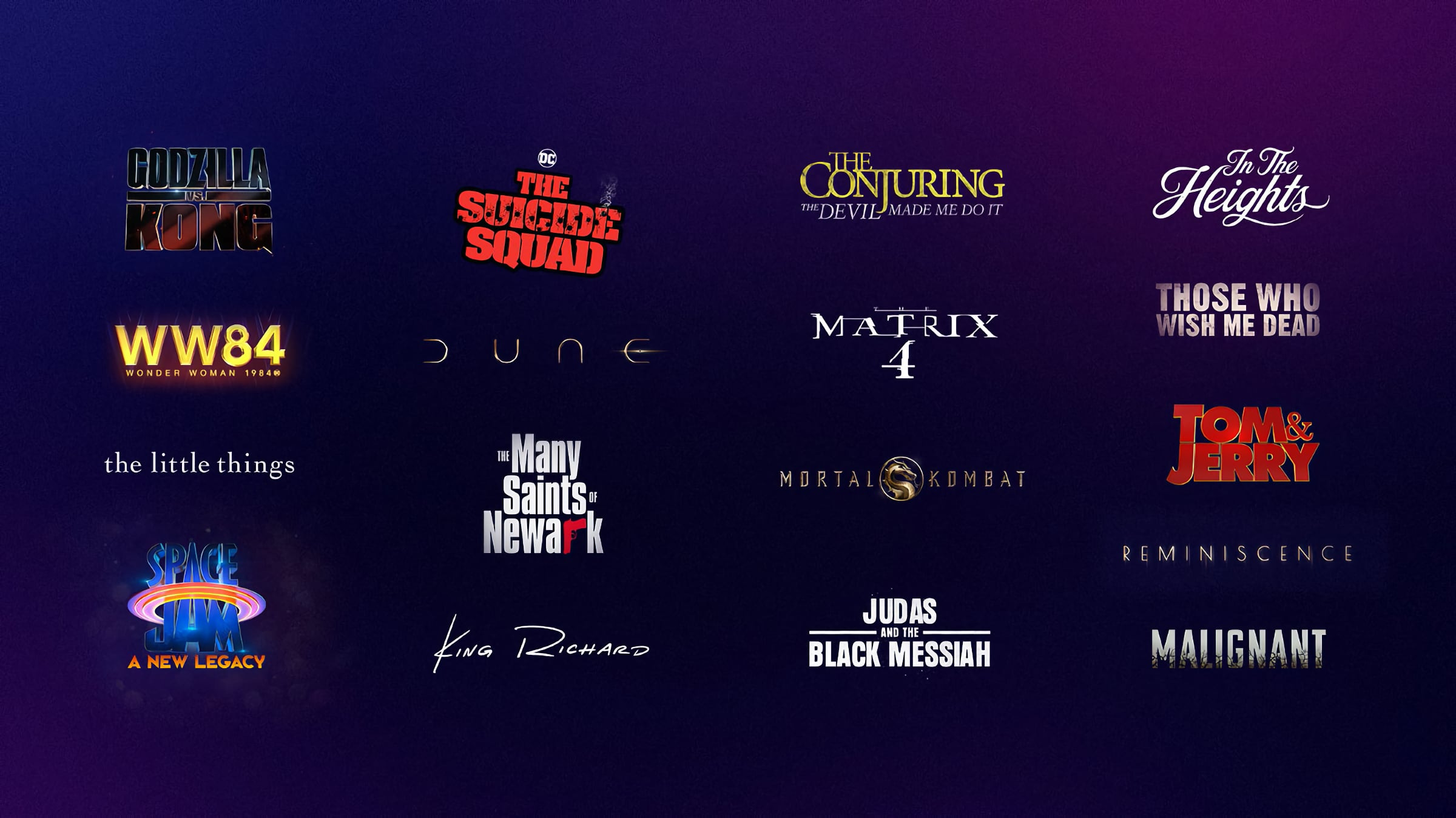
what can’t be acquired
beyond the business incentives, what’s been worrying myself (and most of the internet) is what this acquisition means for storytelling as a whole. let me explain.
streaming and cinema represent such different relationships we have with stories.
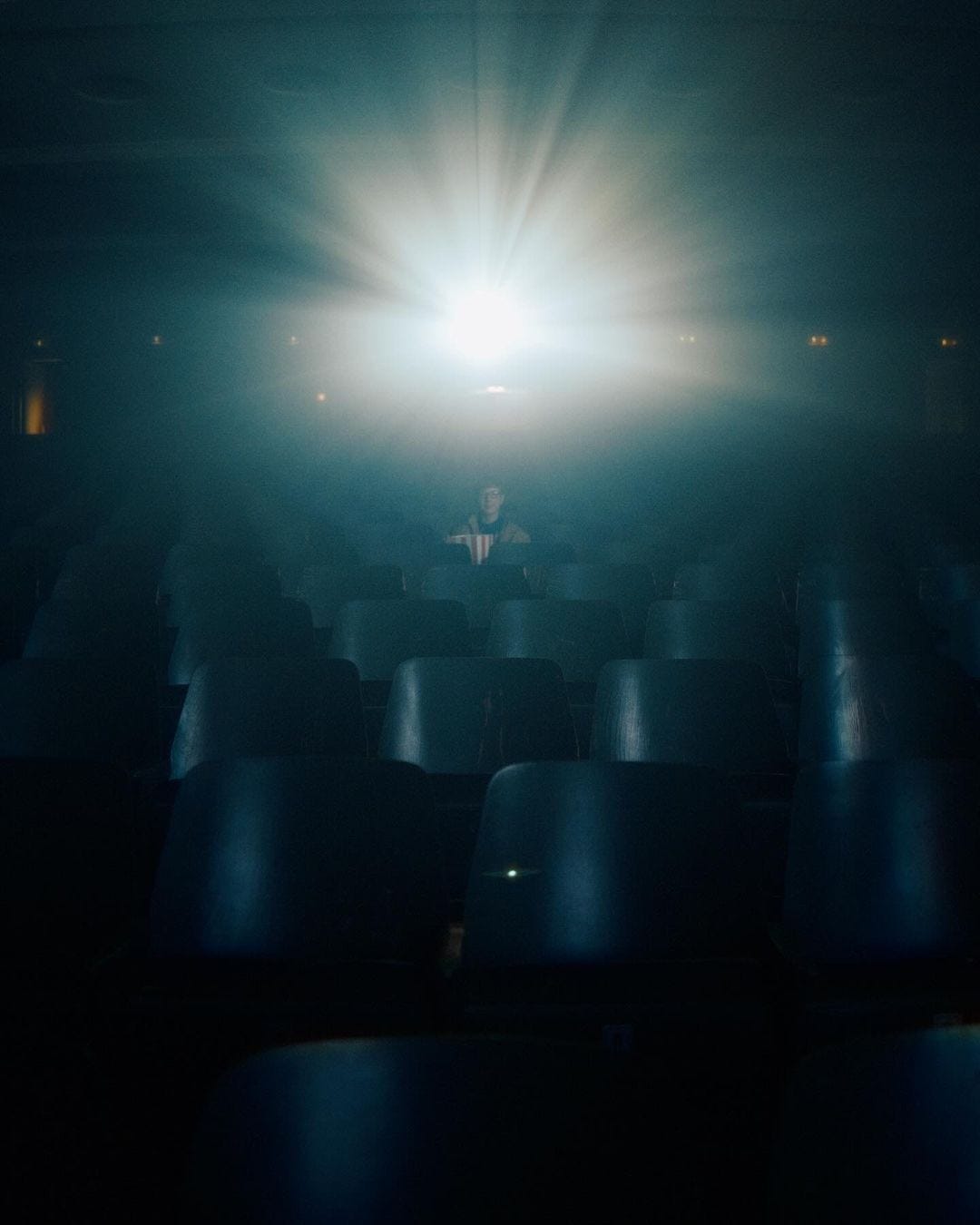
in theaters, cinema demands your attention. you surrender to it. it surrounds you, immerses you, fills your senses.
film theorist julian hanich writes about how a theater can summon joint deep attention—a moment when you a story to imprint itself more deeply. three features of cinema make this possible: the nonmundane space (you leave your house to somewhere else), the silence of the auditorium, and, crucially, the impossibility of manipulating the film.
streaming is built on the opposite premise. total user control. you can 1.5x it. pause, return whenever. put it on ambiently as you work on other things. you can, at any point, decide what you are watching is worth half or none of your attention.
and the metrics reflect these value differences.
in cinema, the focus on box-office hold (how much ticket sales drop or grow week to week), and legs (performance over time relative to the opening) mean that studios care about lasting impact—if a story can sustain momentum, travel through word of mouth, and root itself in culture over time.
streaming lives on a different clock. success is more immediate, determined by first-48-hour viewership and completion rates (because people can click away at any moment). these incentives reward front-loaded hype, quick spikes, and constant novelty rather than cultural staying power.
so cinema is scarcity, streaming is abundance. cinema’s impact is slow, while streaming’s impact is instant. cinema is described as larger than life. streaming is (quite literally) pocket-sized.
these are two unique types of media serving different needs for storytelling, and the world cares that this distinction survives.
there’s something about being small in front of a story. we remember sitting in the dark, neck tilted up, the image so large it fills your whole field of vision. we are not watching it. we’re inside it.
streaming puts the story in your hand. cinema puts you in the story’s hand.
two futures
the best case: netflix learns from what it bought.
netflix becomes a two-track company: streaming and theater, online and in-person.
they understand that their subscriber growth has plateaued in mature markets. therefore, they see owning franchises that require theatrical spectacle—the next batman, the next harry potter series—as a way to build differentiation.
netflix does not flatter warner bros into itself. it builds upon that legacy infrastructure to create synergistic ways, both digital and in-person, to extend the stories they now own that have been passed down through generations.
the worst case: everything becomes content.
netflix absorbs the new catalog and team into its streaming machine.
now, the filmmaker, the producer, the executive who knows that movies need time to germinate, who don’t speak the language of completion rates and churn, feel like the craft they mastered no longer translates.
the restructuring makes that lack of translation permanent.
netflix doesn’t need people who negotiate with theaters or plan regional rollouts. everything now launches everywhere, everywhere, all at once on its digital platforms. those theatrical-facing teams either get cut or get absorbed into general streaming ops.
netflix projects $2–3 billion in savings by year three. savings mean consolidation. consolidation means fewer people focused on theaters.
over time, warner bros’ deep theatrical knowledge gets treated as legacy infrastructure. that knowledge begins to disappear.
hbo max becomes just max, a prestige-coded label on binge-optimized shows all with the predictable end-of-episode cliffhanger.
dc films become global streaming drops with spikes of sensational moments, optimized for the new platform it exists on where users can decide to click away at any time.
the directors guild certainly believe the latter is the likelier future, having already raised “serious concerns” around the acquisition. cinema united further warned that “netflix’s business model does not support theatrical exhibition.”
indeed, netflix has never treated theaters as a priority. their ceo, ted sarandos, called moviegoing “an outmoded idea.” when they release prestige films—roma, the irishman, frankenstein—the theatrical runs are minimal, just enough to qualify for awards, before everything moves to streaming.
netflix says they’ll preserve warner bros’ theatrical business. but why would they?
if the incentives don’t change, the culture won’t, either.
we’re inside a shift now where all of our creative fields are being refined. music, art, film and television. craft is being eroded for attention, and in-person community is moving towards online personalization.
yet beyond the metrics is something no one really knows how to measure: the magic of sitting in the dark with strangers, breathing together through a story.
writing this, i’ve started to notice how my own cinema memories are blurring at the edges. they weren’t that long ago, but they already feel like artifacts of a world that’s moved on.
weekends, five bucks a person, the caramel-heavy popcorn.
the weight of the hushed moment when the movie begins, when the lights dim and the room goes quiet and we are all suspended together in the beginnings of a story.
i hope all of that doesn’t become something i remember instead of something i do.
i hope netflix sees what they bought. not just a catalog, but one of the last places we still practice surrendering completely to a story. i hope they keep two ways of being with stories: one we control, and one we give ourselves over to.
i just hope they don’t make us binge-watch the silver screen.
but i’m not holding my breath.
Great analysis - I hope for the best case, knowing that Netflix has several universes in mind, I hope they can create with joint power of WB. But the worst case sounds... most probably... Let's see where it's all heading.